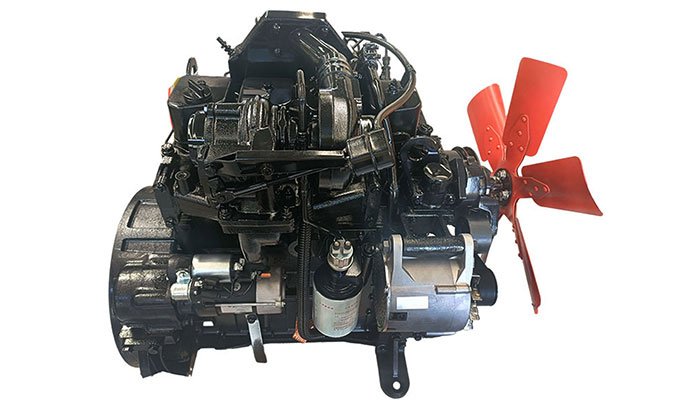
A Cummins diesel engine is a type of internal combustion engine that operates on the principle of compression ignition, where fuel is ignited by the heat generated from compressing air in the combustion chamber.
Unlike gasoline engines, which use spark plugs to ignite the fuel-air mixture, diesel engines rely solely on the high temperature created by compressing air to ignite the diesel fuel.
Cummins, a global leader in diesel engine technology, designs engines that are renowned for their durability, efficiency, and performance.
These engines are widely used in trucks, buses, construction equipment, agricultural machinery, and power generation systems.
Below is a detailed explanation of how a Cummins diesel engine works.
1.Air Intake
The process begins with the engine drawing in clean, filtered air through the intake system.
The air filter ensures that dust, debris, and other contaminants are removed before the air enters the combustion chamber.
In turbocharged Cummins engines, the air is further compressed by a turbocharger, which forces more air into the cylinders.
This increases the engine’s power output and efficiency by allowing more fuel to be burned during combustion.
2.Compression
Once the air enters the cylinder, the intake valve closes, and the piston begins to move upward.
This compresses the air to a much smaller volume, significantly increasing its temperature.
Diesel engines have a high compression ratio, typically ranging from 14:1 to 25:1, which is much higher than that of gasoline engines.
The high compression ratio is essential because it raises the air temperature to the point where diesel fuel can ignite spontaneously upon injection.
3.Fuel Injection
As the piston reaches the top of its stroke (known as top dead center), diesel fuel is injected directly into the combustion chamber at high pressure through a fuel injector.
Cummins engines use advanced fuel injection systems, such as common rail or high-pressure unit injectors, to ensure precise fuel delivery and optimal combustion.
The fuel is atomized into a fine mist, allowing it to mix thoroughly with the hot, compressed air.
The high temperature of the air causes the diesel fuel to ignite without the need for a spark plug.

4.Combustion
The ignition of the fuel creates a rapid expansion of gases, generating a high-pressure surge that forces the piston back down.
This downward movement of the piston is known as the power stroke, and it is the stage where the engine converts the chemical energy of the fuel into mechanical energy.
The force of the power stroke is transferred to the crankshaft via the connecting rod, which then converts the linear motion of the piston into rotational motion to drive the vehicle or equipment.
5.Exhaust
After the power stroke, the piston moves back up, and the exhaust valve opens.
The burnt gases are expelled from the cylinder through the exhaust manifold.
In modern Cummins engines, the exhaust gases pass through an after-treatment system, which includes components like diesel particulate filters (DPF) and selective catalytic reduction (SCR) systems.
These systems reduce harmful emissions, such as nitrogen oxides (NOx) and particulate matter, ensuring compliance with stringent environmental regulations.
6.Turbocharging (If Equipped)
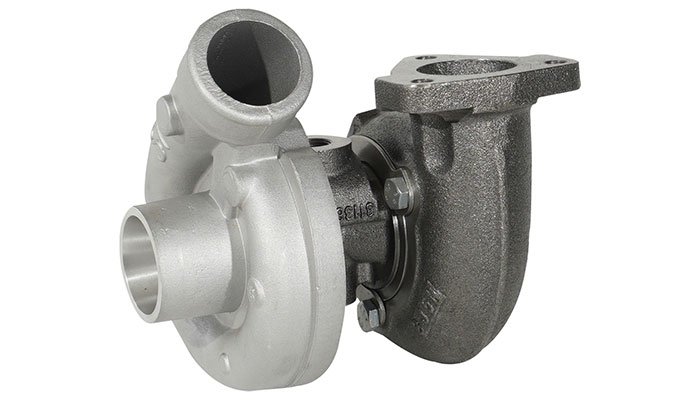
Many Cummins diesel engines are equipped with turbochargers to enhance performance.
A turbocharger uses the energy from the exhaust gases to spin a turbine, which is connected to a compressor.
The compressor forces more air into the combustion chamber, allowing for more efficient burning of fuel and increased power output.
Turbocharging also improves fuel efficiency by making better use of the energy in the exhaust gases.
7.Cooling and Lubrication
Diesel engines generate significant heat during combustion, so a cooling system is essential to maintain optimal operating temperatures.
Cummins engines use a liquid cooling system, where coolant circulates through the engine block and cylinder head to absorb heat.
The heated coolant is then cooled in the radiator before being recirculated.
Additionally, the engine’s lubrication system ensures that all moving parts are adequately oiled to reduce friction and wear, extending the engine’s lifespan.
8.Electronic Control and Monitoring
Modern Cummins diesel engines are equipped with advanced electronic control modules (ECMs) that monitor and regulate various engine functions.
The ECM adjusts fuel injection timing, air-fuel ratio, and turbocharger boost pressure to optimize performance, fuel efficiency, and emissions.
It also provides diagnostic information, making it easier to identify and address potential issues.