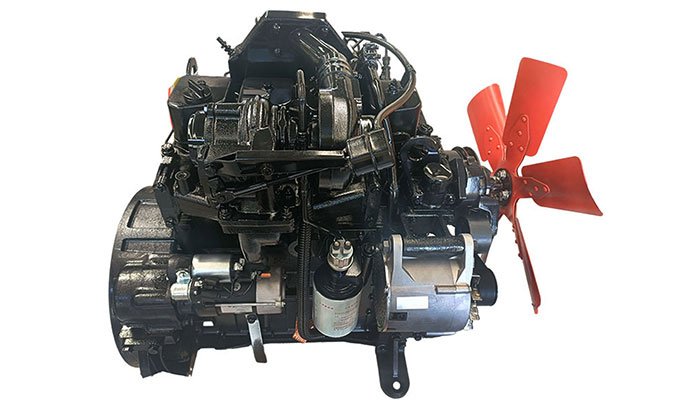
In the engineering and Marine sectors, the 5.9L Cummins engine provides solid and reliable support for a wide range of critical equipment with its powerful power.
However, like all mechanical equipment, it will inevitably encounter some common technical problems during long-term use.
An in-depth understanding of these issues is essential for you to identify and resolve potential failures in a timely manner to ensure continued efficient and stable engine.
Here are the TOP10 frequently asked questions about Cummins 5.9L engines:
1.Startup difficulties
At low temperature, the oil viscosity increases, the friction of moving parts increases, and the starting speed decreases.
The capacity of the battery is reduced at low temperatures. If the battery is not used for a long time and is in a low temperature environment, it may not be able to provide enough power.
The reduction of starting speed leads to serious leakage of compressed air, insufficient temperature and pressure of compressed air, and difficult combustion of fuel.
Low temperature makes diesel viscosity increase, fuel supply efficiency decrease and atomization effect is not good.
2.White smoke is emitted from the exhaust pipe
Diesel contains a lot of water, water in the cylinder by high temperature into water vapor with flue gas discharge.
The cylinder head bolt is loose or the cylinder gasket is damaged, and the cooling water enters the cylinder.
The cylinder block or cylinder head has trachoma or cracks, and water evaporates into the cylinder and then comes out.
3.Black smoke is emitted from the exhaust pipe
Low fuel quality, such as long-term placement is not properly handled.
The intake device is bad and the air filter element is blocked.
Insufficient fuel injection pressure and low injection efficiency.
The cylinder pressure is low, the fuel atomization effect is poor, and the combustion is insufficient.
4.Insufficient engine power
The fuel filter or oil-water separator is damaged or blocked.
Low pressure oil circuit is blocked by foreign matter.
The fuel supply of the oil transport pump is insufficient, and the oil inlet network is blocked.
Fuel tank cap intake valve failed.
5.The engine works rough
Diesel is of poor quality.
Nozzle advance Angle is too large.
Fuel injector seal is insufficient, fuel leakage, atomization effect is not good.
The oil supply of individual cylinders is larger.
6.The engine has no idle speed or abnormal idle speed
No idle speed may be the governor idle spring is too soft or broken, the sensing element is too worn, the plunger is badly worn, the temperature is too low, and the cylinder pressure is too low.
Excessive idle speed may be improper adjustment of the throttle lever, too soft return spring, idle limit block or adjustment screw misalignment, idling spring too hard or excessive preload force.
The unstable idle speed may be air in the oil circuit, poor oil supply in the low pressure oil circuit, improper adjustment of the idle stability device, poor atomization of the fuel injector, uneven oil supply of the fuel injection pump, and wear of the governor connection rod.
7.Engine flameout during operation
Sudden flaring may be fuel injection pump drive teeth broken, transmission gear failure, fuel injection pump shaft broken, internal moving parts stuck, control rod and connection pin off.
Slow flameout may be the exhaustion of diesel fuel in the tank, the blockage of the tank cap vent valve, the blockage of the fuel filter or oil-water separator, the rupture of the oil supply line or the intake of air, the oil delivery pump does not work, and the water in the tank.
8.Low oil pressure
Low oil level, external oil leakage.
Oil pressure switch and other failures, oil labeling does not match, mixed with coolant and fuel.
Oil filter blocked, piston cooling nozzle damaged, oil pump failure.
High oil temperature, loose or broken tubing, oil pressure regulator failure in main oil passage, oil cooler blockage, engine internal damage.
9.The supercharger is faulty
In the engineering environment, the turbocharger turboshaft is worn, the impeller is damaged, and the booster pressure is insufficient.
When the ship is in use, if the start and stop operation is not proper, it is easy to cause premature wear of the supercharger floating bearing and sealing ring.
10.The timing system is faulty
For a long period of high load operation, the timing chain or belt may stretch, wear, skip teeth, affect the valve and ignition timing, resulting in engine power reduction, jitter or even failure to start.
As an industry leader focused on engine and parts supply, our company can not only provide you with high quality 5.9L Cummins engine and original parts, aftermarket parts, to ensure that you get the most suitable and reliable products when equipment renewal or parts replacement.
Whether it is engine troubleshooting, or daily maintenance, we can solve your problems and let your equipment run without worries.