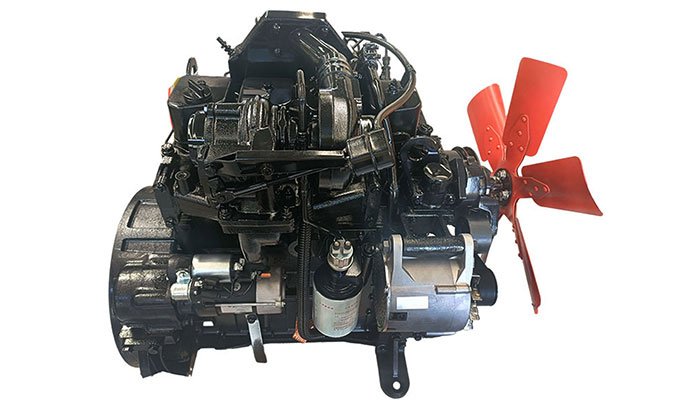
When the compression performance of the Cummins engine is unstable, it is indeed necessary to diagnose the problem through a series of systematic inspections.
The following is a detailed interpretation and supplement of the inspection steps you provided:
1.Compression Pressure Test
Preparation Stage
Make sure that the engine has been completely cooled (stopped for at least 2 hours) to avoid burns during the test.
At the same time, prepare the appropriate compression pressure gauge and necessary disassembly tools.
Test Process
Remove the spark plug or fuel injector of each cylinder in turn, and connect the compression pressure gauge joint tightly to the mounting hole.
Use the starter to drive the crankshaft to run the engine for 3-5 turns to ensure that the pressure gauge can accurately read the maximum pressure value of each cylinder.
Result Analysis
According to the engine model, check whether the compression pressure is within the specified range.
At the same time, compare the pressure values of each cylinder.
The difference should not be too large, otherwise it may indicate problems such as poor cylinder sealing or piston ring wear.
2.Leakage Detection
Preparation Stage
Use a cylinder leakage detector to ensure that the connection seal between the detector’s inflation nozzle and the cylinder is leak-free.
Test Steps
Connect the air filling nozzle of the tester to the spark plug or fuel injector installation hole of the cylinder to be tested, and connect the other end to the compressed air source.
Open the compressed air valve, fill in 0.6-0.8MPa of pressure air, and observe and record the leakage value.
Result Judgment
If the leakage exceeds the standard value, it means that the cylinder is not well sealed, which may be caused by damage to the cylinder gasket, piston ring or valve seal.

3.Endoscopic Inspection
Preparation stage
Select a suitable industrial endoscope to ensure that the probe can enter the cylinder smoothly and the image is clear.
Inspection process
After removing the spark plug or fuel injector, slowly extend the endoscope probe into the cylinder.
Carefully check the wear, tear, carbon deposit or ablation of the cylinder wall, piston, piston ring, valve and other components through the display screen.
Result judgment
Any wear, tear, carbon deposit or ablation may affect the sealing and compression performance of the cylinder, so it is necessary to repair or replace the damaged parts in time.
4.Experience Judgment
Start-up Observation
When starting the engine, pay attention to the running sound.
If there is a “hissing” leak, it may indicate that there is a problem with poor cylinder sealing.
Driving Performance
During driving, if the engine power is insufficient, the acceleration is slow, the climbing is weak, or the exhaust emits serious black smoke, it may also be a manifestation of reduced compression performance.
At this time, the problem should be comprehensively judged in combination with other inspection results.
In summary, through compression pressure testing, leakage detection, endoscopic inspection and experience judgment, the compression performance problem of Cummins engine can be fully and accurately diagnosed.
Once an abnormality is found, the damaged parts should be repaired or replaced in time to ensure the normal operation and optimal performance of the engine.